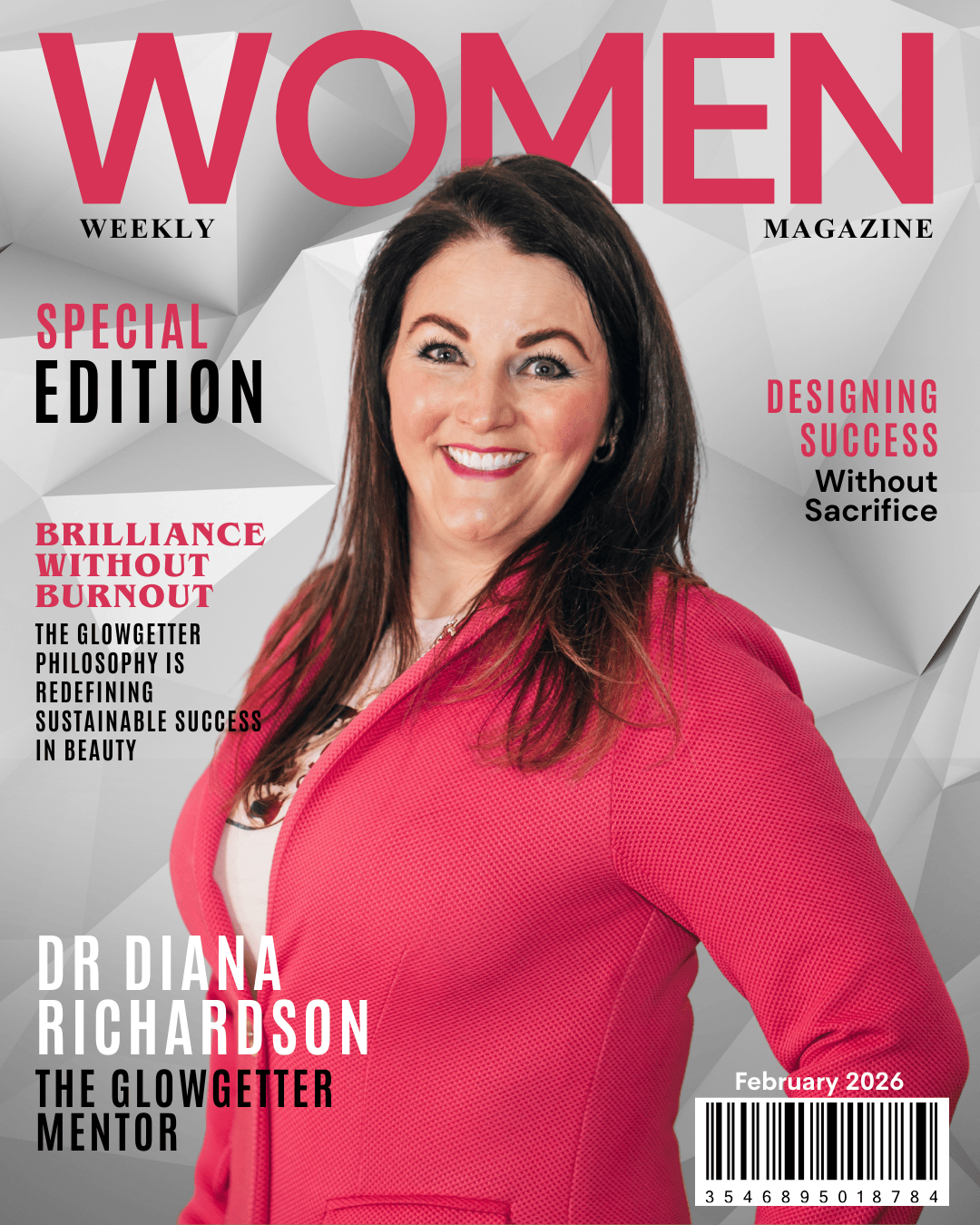
Dana Hatch’s career journey does not follow the typical leadership story. With over two decades of expertise in aesthetics, senior leadership, and coaching, she has worked closely with top achievers who looked to have everything they needed for success—resources, systems, and drive—but were still unable to move forward. Dana eventually discovered a recurrent trend. The impediment was rarely strategy or effort. It was internal. Chronic self-doubt, weariness, perfectionism, and deeply ingrained survival tendencies all slowed growth, even among the most capable leaders.
Her insight was deeply personal. Early in her career, Dana built success in the aesthetics sector while simultaneously advising businesses on leadership and operations. On paper, she was achieving her goals. Privately, however, she questioned her worth, battled imposter syndrome, and feared visibility in high-level spaces. She realized that while the world offered endless tools for external success, it failed to address the inner mechanisms that truly govern performance: the brain and nervous system.
Dana came to understand that her challenges were not rooted in poor planning but in neurological conditioning. Her nervous system had learned to prioritize survival over expansion and validation over authenticity. That realization changed everything. Determined to understand why capable individuals sabotage their own progress, she immersed herself in neuroscience, studying how fear responses, trauma patterns, and subconscious habits shape behavior. This knowledge reshaped her work entirely. Consulting alone was no longer enough. True change, she discovered, begins internally—and when the brain rewires, results follow naturally.
Her most defining leadership lessons emerged not from success, but from collapse. Dana recalls periods of extreme burnout, relentless overextension, and the pressure to excel in every role. Watching her own teams struggle under unclear expectations and constant stress became a turning point. Strong metrics and detailed plans could not compensate for nervous system overload. Leadership, she realized, is rooted in presence, clarity, and emotional safety.
That shift marked the beginning of her coaching practice. Dana stopped leading through performance alone and began leading through grounded awareness. Her personal struggles—feeling unseen, pushing through exhaustion, and growing businesses while silently doubting herself—became the foundation of her work with others. Today, she supports leaders in addressing not only operational challenges but also the inner barriers that ultimately determine success or stagnation.
At the core of Dana’s methodology is the integration of neuroscience with executive coaching. She helps leaders identify unconscious patterns such as procrastination, people-pleasing, over-functioning, and avoidance. These behaviors, she explains, are not flaws but protective responses shaped by past experiences.
High performers, in her view, are rarely unmotivated. Instead, their nervous systems may associate success, visibility, or rest with danger. Even as they aim for growth, part of their brain remains on high alert, waiting for something to go wrong. Dana’s work focuses on uncovering these patterns and guiding clients through nervous system regulation, identity recalibration, and deliberate pattern disruption. The goal is sustainable transformation—allowing leaders to move forward with confidence, ease, and consistency.
One client’s experience illustrates this approach. A highly trained physician wanted to open her own aesthetics clinic but remained stuck despite having all the qualifications. Traditional business advice failed because it overlooked the fear beneath the hesitation. Through Dana’s coaching, the physician addressed her relationship with visibility, built internal safety, and embraced her leadership identity. The result was decisive action: she launched her clinic, built a team, and stepped fully into her role as a leader.
Dana emphasizes that leadership growth is not about acquiring more techniques. It is about alignment. When leaders operate from internal regulation and self-trust, execution becomes fluid rather than forced.
Her clients range from dentists and founders to executives overseeing multi-location organizations. Across industries, Dana observes the same pattern: high achievers often disconnect from their original vision and voice, chasing metrics that cannot deliver fulfillment if the person behind them is misaligned.
Her work begins by reconnecting individuals with who they are at their core. From there, systems are built to support humans—not the other way around. Data, dashboards, and quarterly targets must coexist with transparency, culture, and psychological safety. Clear processes reduce friction, while strong culture sustains performance.
Dana has also seen firsthand that scaling without alignment is risky. Growth requires solid foundations, empowered middle leadership, and systems that prevent miscommunication under pressure. Without these, expansion becomes fragile.
Education plays a central role in her philosophy. Leaders who stop learning become rigid, and organizations that fail to teach stagnate. Personal development fosters adaptability and humility, while organizational learning ensures that vision and values are lived, not just stated.
Another challenge Dana frequently encounters is hesitation between planning and execution. Many leaders delay action, waiting for complete certainty. In her experience, this is often fear disguised as preparation. Vision alone is not enough. Progress requires movement, trust in teams, and the courage to act without perfect answers.
Dana encourages leaders to anchor their direction, empower others, and move forward. Clarity, she insists, is discovered through action—not endless analysis.
She also speaks passionately about the distinct strengths women bring to leadership. Navigating multiple roles throughout life cultivates empathy, intuition, resilience, and adaptability. Women understand how systems impact people and are uniquely equipped to build cultures rooted in belonging.
Her own career, however, was shaped by bias—both subtle and overt. She recalls moments when her ideas were dismissed until echoed by male colleagues, or when her credibility was questioned. One defining experience occurred during interviews for a CEO role, where a comment about her personal life replaced a discussion of her qualifications. Rather than internalizing the insult, Dana gained clarity. If the system was not built for her, she would build her own.
She stopped seeking approval and embraced the very qualities she had once been told were excessive—her intensity, honesty, and emotional depth. These, she realized, were not weaknesses but sources of power. She also chose to surround herself with women who valued collaboration over competition, rejecting scarcity-driven dynamics in favor of collective growth.
Today, Dana is deeply committed to mentoring the next generation of female leaders in healthcare, education, and business. She teaches them to regulate their nervous systems, own their identities, and lead without apology. Her mission is not simply to help women advance within existing structures but to redesign those structures entirely.
Looking ahead, Dana identifies several forces shaping the future of leadership. Biology and humanity must be integrated with strategy, as stress management and cognitive flexibility become essential skills. Artificial intelligence must be used ethically, without sacrificing empathy or judgment. Trust, integrity, and character will outweigh technical expertise. Leaders must remain agile in uncertainty, and experiential learning—coaching, simulations, and real-time feedback—will replace outdated educational models.
For Dana, leadership is not about image or authority. It is about who a person becomes under pressure. She challenges leaders to stop performing leadership and start embodying it—by rewiring limiting beliefs, cultivating inner stability, and showing up with authenticity.
When asked about the legacy she hopes to leave, her answer reflects her lifelong mission. She wants to be remembered not for titles or numbers, but for impact—for challenging norms and giving others permission to do the same. She envisions a future where leaders are confident in their place at the table, where women build alongside one another, and where authenticity reshapes culture itself.
Dana Hatch’s work offers a modern blueprint for leadership—one that blends neuroscience, identity, strategy, and human connection. Through clarity, courage, and unwavering presence, she continues to redefine what it means to lead in 2025 and beyond, shaping organizations and empowering leaders to step fully into who they are meant to be.