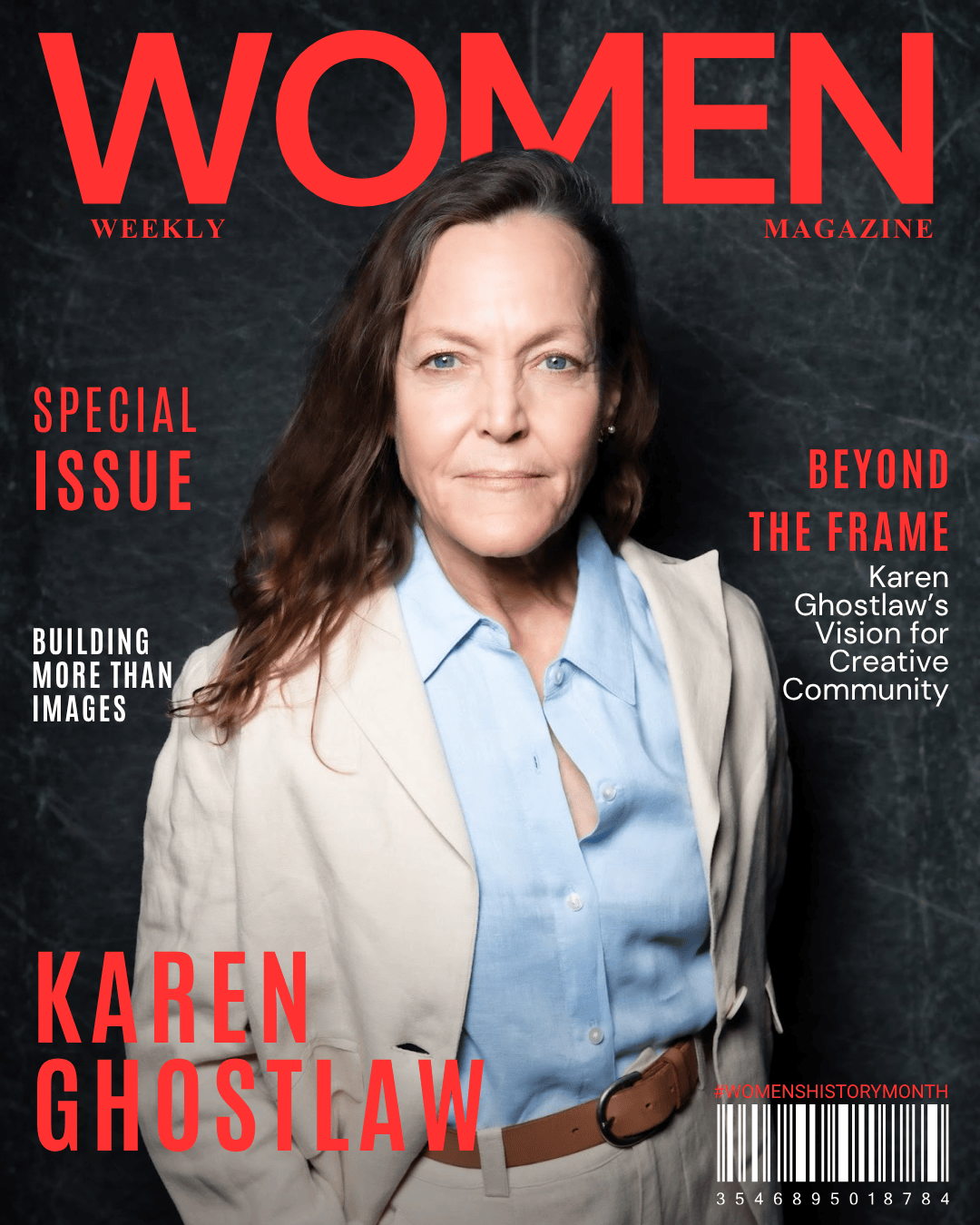
Interviewer: Karen, your work began with conceptual photography grounded in identity and resilience. How has that evolved into the expansive work you’re doing today?
Karen Ghostlaw: Storytelling has always been at the center of everything I do. Photography was my starting point, but over time I became more interested in what exists beyond the image, the context, the voice, and the connection between the artist and the audience. That curiosity naturally expanded my work into creating spaces where those conversations can happen more deeply and more meaningfully.
Interviewer: You’re now the Editorial Director of The Pictorial List. How did that role shape your creative direction?
Karen Ghostlaw: It felt like a natural extension of my practice. The Pictorial List began as a digital photography platform, but it has grown into something much more global and interconnected. My role is about guiding the narrative, working with artists to help them articulate their perspectives while creating a space where their work can be understood on a deeper level. It’s not just about visibility; it’s about thoughtful engagement.
Interviewer: Your editorial work emphasizes dialogue rather than just presentation. Why is that important to you?
Karen Ghostlaw: Because photography alone, while powerful, is only one part of the story. When you introduce the artist’s voice, their experiences, and their intentions, the work becomes more immersive. I’ve always believed that art should invite reflection and conversation. That’s what we try to create a space where people slow down, truly engaging with what they are seeing.
Interviewer: That idea of slowing down seems to carry into your publishing work as well. What inspired The Pictorial List – Volume One: New York?
Karen Ghostlaw: In a world that is increasingly digital, there’s something incredibly meaningful about holding a physical piece of work in your hands. The book was a way to bring permanence to something that often feels fleeting. It allows the viewer to spend time with the images, to revisit them, and to connect in a more intimate way. It’s not just a publication, it’s a statement about presence and the lasting power of visual storytelling.
Interviewer: You’ve also co-founded the Pictorial Foundation. What motivated that step forward?
Karen Ghostlaw: We wanted to move beyond providing visibility and start creating real opportunities for artists to grow and connect. The foundation allows us to do that in a more structured and impactful way. It’s about building infrastructure by supporting exhibitions, programming, and initiatives that bring artists together in meaningful ways.
Interviewer: The ArtSpace in Newburgh is a significant part of that vision. What does this physical space represent for you?
Karen Ghostlaw: It represents a shift from digital interaction to real-world experience. The ArtSpace is not just a gallery. but a place where people come together to share ideas, to collaborate, and to experience art collectively. Through exhibitions, workshops, and open dialogue, it becomes a living environment where storytelling is not just observed, but participated in.
Interviewer: Your work now spans editorial, publishing, and physical programming. How do these elements come together?
Karen Ghostlaw: They’re all interconnected. The editorial platform introduces artists and ideas, publishing gives those ideas permanence, and the physical space creates a direct human connection. Together, they form an ecosystem that supports artists in a more complete and sustainable way.
Interviewer: Looking ahead, what are you hoping to continue building?
Karen Ghostlaw: I want to keep expanding this framework and strengthening the relationship between artists and audiences. It’s about creating more opportunities for connection and continuing to build spaces where creativity can thrive.
Interviewer: At its core, what does storytelling mean to you today?
Karen Ghostlaw: It’s something collective. It’s no longer just about individual expression, and more about how those expressions come together and resonate across different perspectives. When you create space for people to share authentically, storytelling becomes a powerful force for connection.
Karen Ghostlaw’s evolution from artist to editor, publisher, and nonprofit co-founder reflects a thoughtful and intentional approach to creativity. In a fast-moving digital world, her work stands as a reminder that meaningful storytelling is not built overnight—it grows through collaboration, dialogue, and a shared commitment to creating something that lasts.